A JustCapture Field Story
Small Gods
of the Backyard
Six portraits of the creatures we walk past every single day — and never quite look at.
You don't need a jungle for this. You don't need a boat, a permit, or a 4 a.m. alarm set for somewhere far away. Half the wildest lives on this planet are being lived out on a clothesline wire, a tree stump, a parapet wall — three feet from where you had your coffee this morning.
We've just trained ourselves not to see it. A pigeon is "just a pigeon" until you watch it hold a wingbeat mid-air like it's pausing time. A crow is "just a crow" until it looks directly at you and you realise, uncomfortably, that it was watching first.
This is a story about six ordinary neighbours. None of them posed. None of them were fed, called, or coaxed closer for the sake of a photograph. They simply carried on being themselves, and a camera happened to be pointed the right way.
Field Note — 07:02 AM
The Philosopher
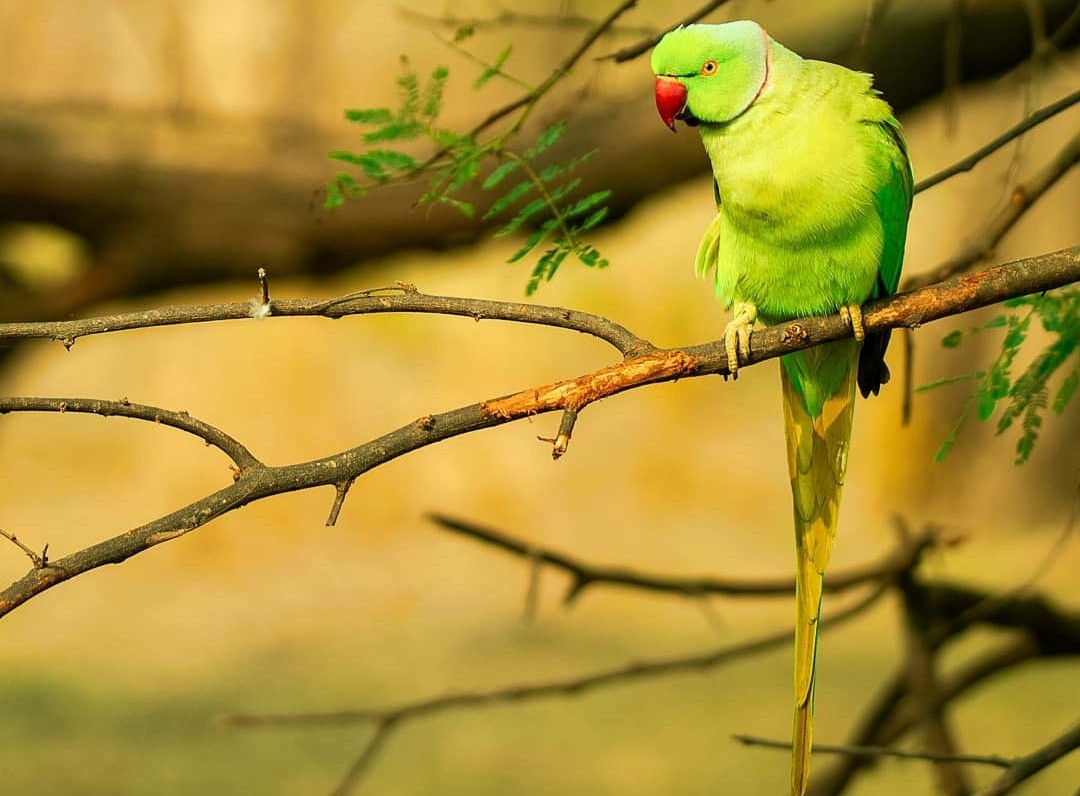
He hangs upside-down-ish off the thinnest branch he can find, head tipped so far forward it looks accidental. It isn't. A rose-ringed parakeet inspects a branch the way an editor inspects a manuscript — slowly, critically, with the quiet assumption that most of what's in front of him isn't good enough yet.
The red beak, the pale rose collar, that impossibly long tail streaming down like a punctuation mark — none of it is for us. It's Tuesday. He's just checking the bark for something worth the effort.
"I'm not sulking. I'm deciding if this branch has earned my full attention."
Field Note — Two-Handed Breakfast
The Forager
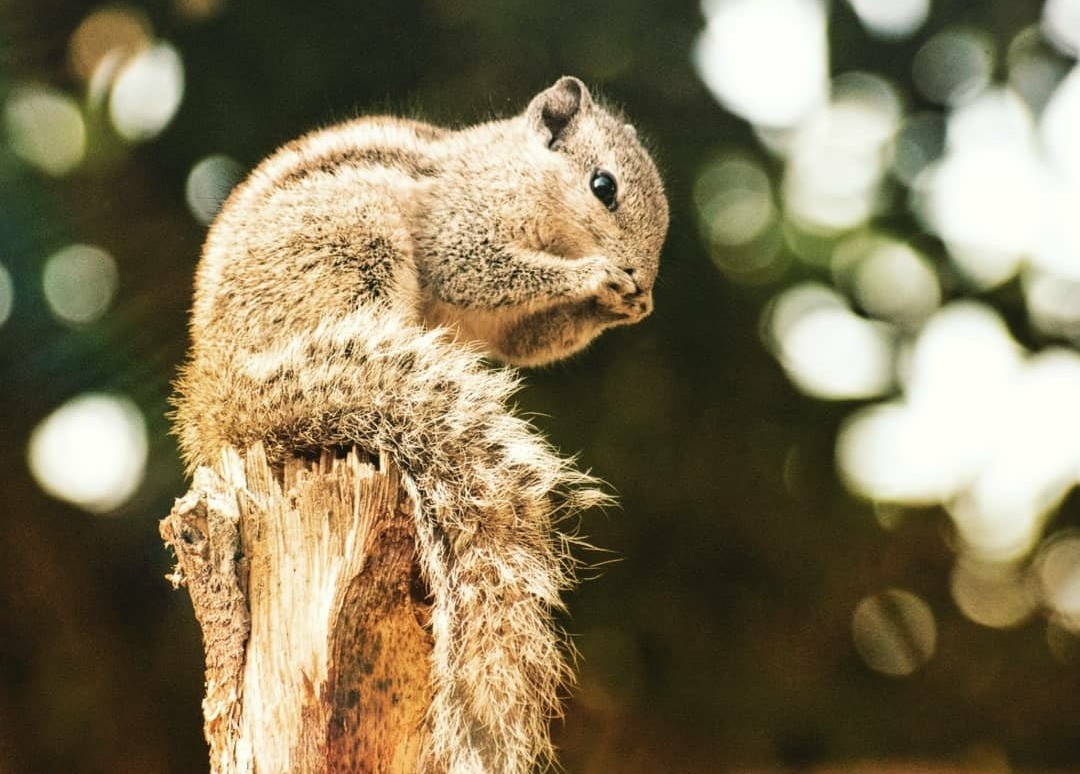
Indian palm squirrels don't eat so much as negotiate with their food — turning it, testing it, holding it in both paws like it might argue back. This one had claimed the top of a broken stump as a dining table, tail curled around the wood for balance, utterly unbothered by the twenty-foot drop below.
Watch the stripes down the back for long enough and you stop seeing "squirrel" and start seeing an entire tiny civilisation of decisions: where to sit, what to eat first, when to bolt. This is the busiest ten seconds of anyone's morning.
"You'll notice I have a system. You would not understand my system."
Field Note — Mid-Call
The Herald
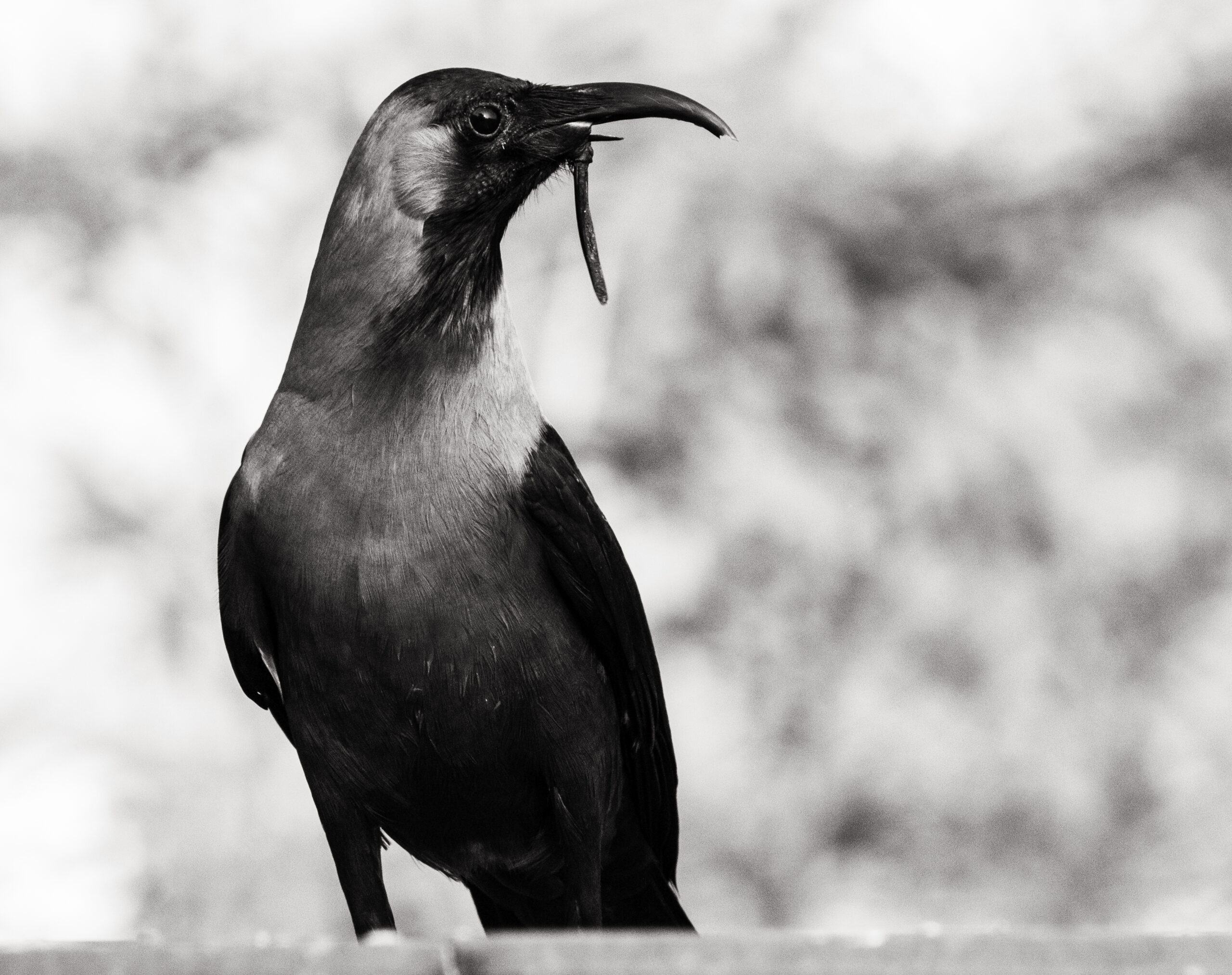
Nobody asked the house crow to announce the neighbourhood's business, and yet here he is, beak cracked open mid-caw, doing exactly that. Stripped of colour, the photograph makes something obvious that daylight usually hides: the sheer architecture of that beak, curved like a tool built for a very specific job.
Crows are supposed to be common. Overlooked. Background noise. But look one dead in the eye for long enough and the feeling flips — you start to suspect you're the one being assessed, filed away, remembered.
"I already know which bin day it is. I know things about you, too."
Field Note — Full Wingspan
The Commuter
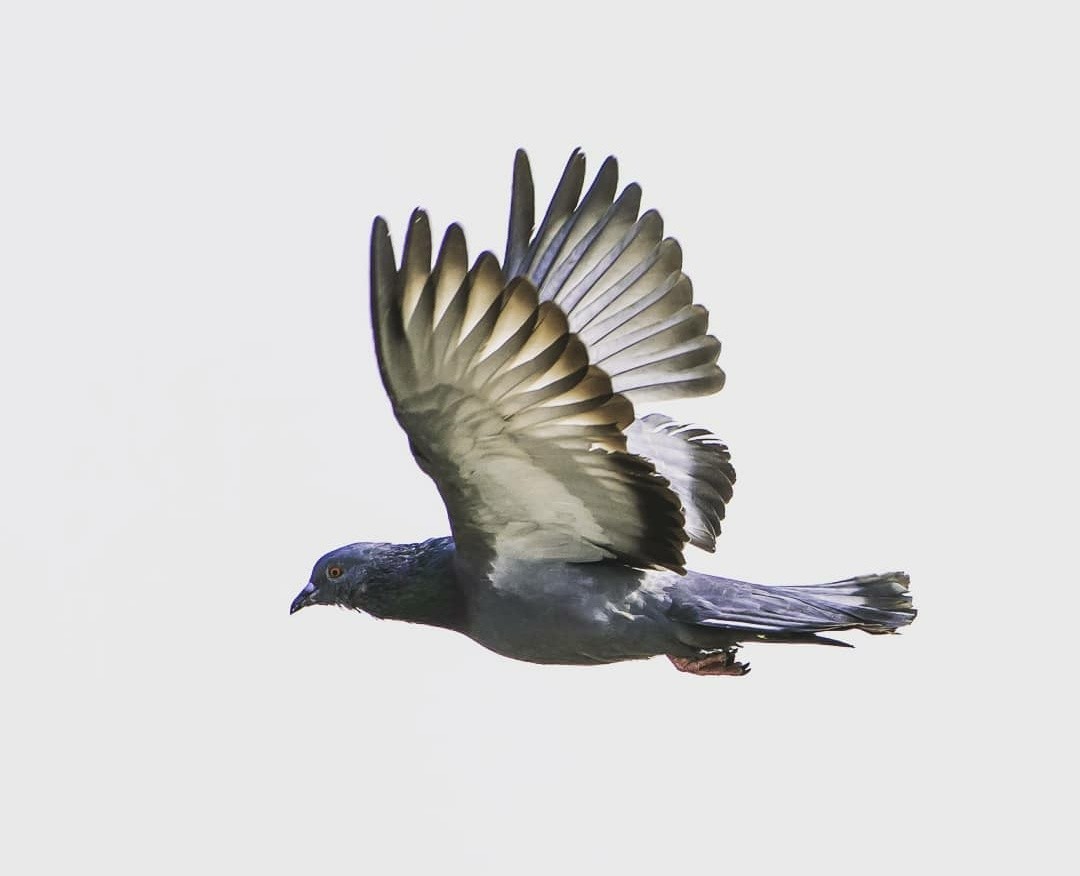
Rock pigeons get filed under "pest" so quickly that almost nobody has actually seen one properly — not like this, wings thrown fully open against a flat, quiet sky, every primary feather fanned and backlit like stained glass. There is nothing clumsy about this shape. It is precision, mid-motion, caught for a fortieth of a second on its way somewhere it needed to be five minutes ago.
Take away the ledges and the breadcrumbs and the traffic noise, and what's left is just this: an animal built extraordinarily well for the one thing it's doing right now.
"Call me a pest again once you've seen my wingspan properly."
Field Note — 06:41 AM, Rooftop Fog
The Landlord
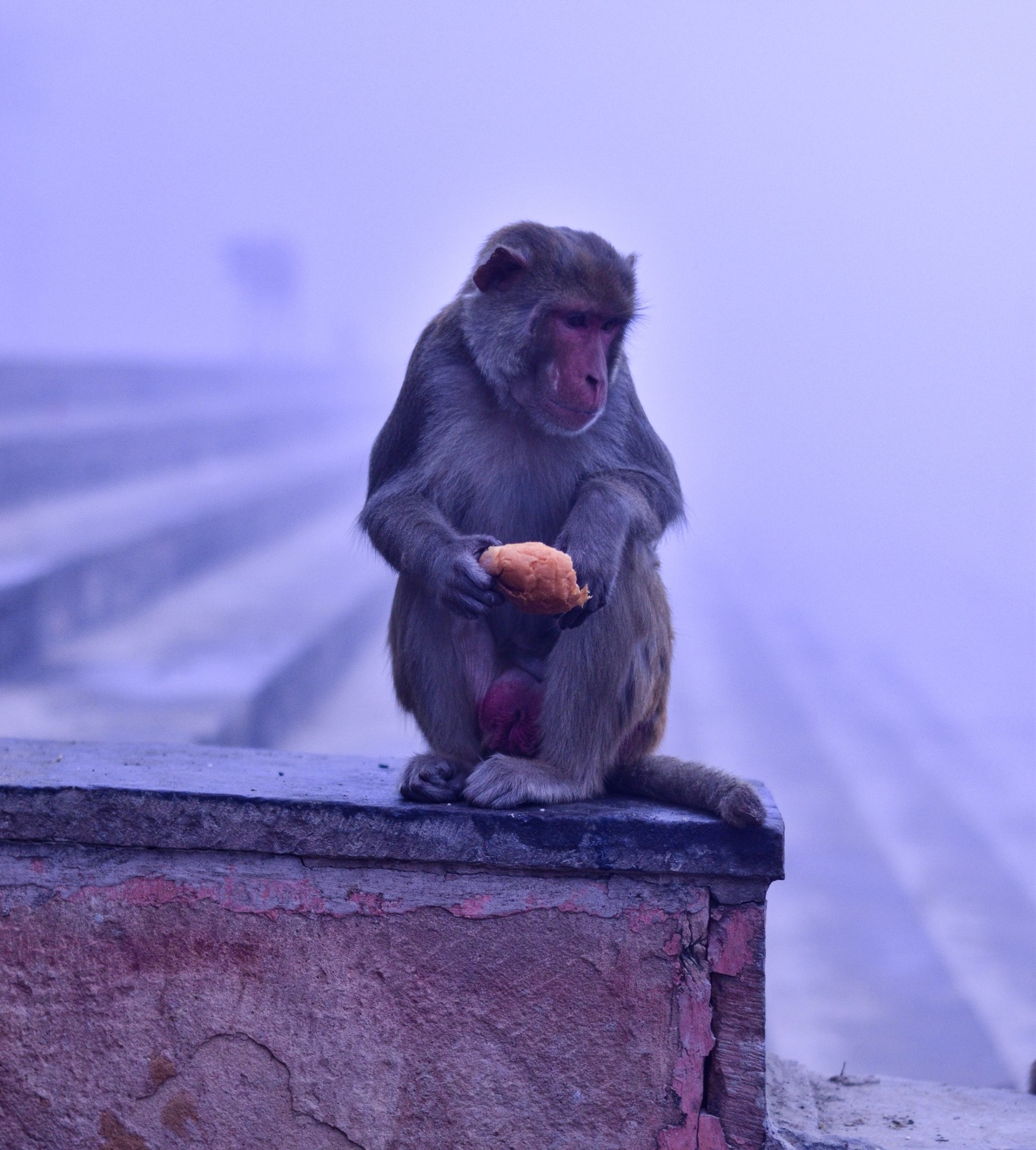
The fog hadn't lifted yet, and neither had he — a rhesus macaque parked on the ledge of an old stone wall like he'd been billed for the space and paid up front. Someone, somewhere, had handed over a bun. He wasn't grateful. He was simply collecting what was, in his estimation, already owed.
There's a particular posture animals get when they've stopped being afraid of a place and started owning it — knees up, shoulders low, eyes doing all the work. Behind him the walkway dissolves into lavender mist, but he isn't looking at the view. He's looked at it a thousand mornings already. The bread is new. The view isn't.
"This wall, this fog, this breakfast — all of it was mine before you showed up with a camera."
Field Note — The Closing Shot
The Wanderer
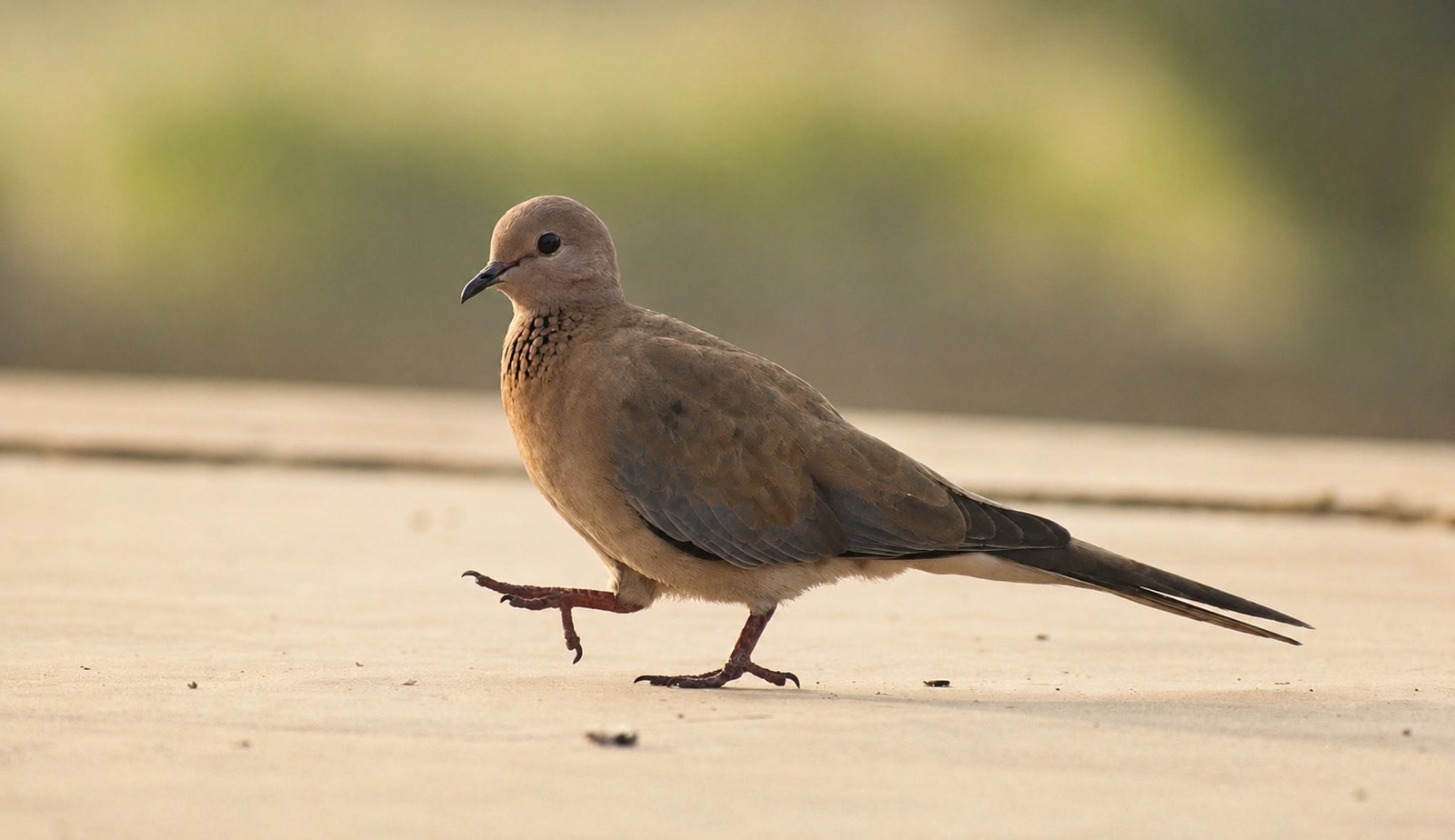
Every story about paying attention needs an ending that doesn't try too hard, and this laughing dove obliged. Caught mid-stride in the low gold light, one foot lifted, tail feathers trailing like an afterthought — she isn't performing for the lens. She's simply walking somewhere, unbothered, in no hurry to explain herself.
That, in the end, is the whole point of this project. Not the drama of a launch or a dive, but the quiet dignity of an animal just going about its Tuesday, letting us watch, owing us nothing.
"I wasn't posing. I was simply walking somewhere you weren't invited."
What Six Backyard Mornings Taught Me
Notes From Ground Level
I used to think good wildlife photography meant distance — a boat, a hide, a border crossing. Then I spent a week not leaving a fifty-metre radius and came back with more genuine behaviour than most of my "real" trips. You don't find the wild by travelling further. You find it by slowing down where you already are.
Every animal in this story lives closer to people than almost any other creature on earth, and every single one of them has been reduced to a single boring word — pest, nuisance, background. Spend an hour actually watching and the word stops fitting. Familiarity is not the same as understanding.
Nothing here was baited, called in, or cornered for a better angle. If a shot needed the animal stressed to get it, it didn't make the cut. These six didn't perform for the camera — the camera was simply lucky enough to be there. That's the whole craft, really: showing up quietly, often, and staying a little longer than feels necessary.